Discovering a whitefly infestation on your indoor plants is no fun. You may think they’re just annoying, but those tiny white bugs can cause major damage to your beloved plants.
Since they can fly around, they could quickly infest all of your houseplants before you realize there’s even a problem. But the good news is that you can get rid of whiteflies on your plants, and it’s really not that hard.
Below I will walk you through everything you need to know, including how to correctly identify them, their life cycle, the damage they cause, and where they come from. Most importantly, I’ll share organic treatment methods that will eliminate them – FOR GOOD!

What Are Whiteflies?
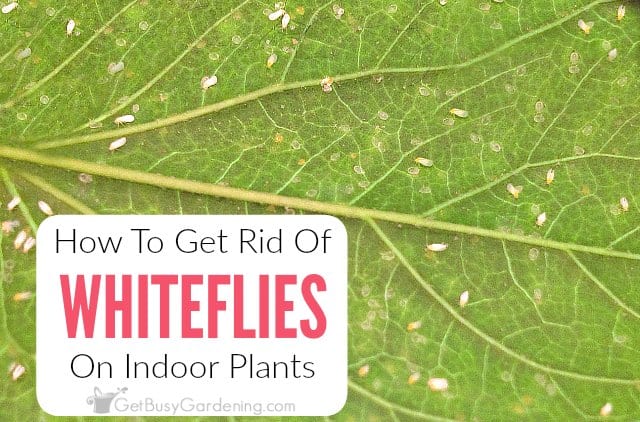
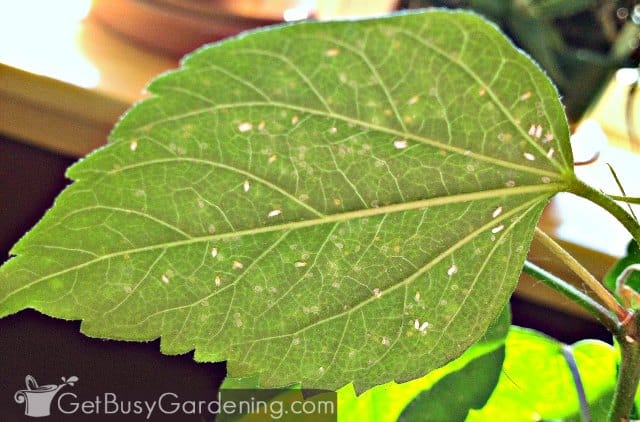
Whiteflies are tiny bugs that feed on plants by sucking the sap out of the foliage. They mostly cluster on the undersides of the leaves, and they can attack many types of indoor plants.
These annoying pests are difficult to control once they get indoors, in both greenhouses and homes alike.
They multiply very quickly, and their population can double in a short time. Since they are so small, you probably won’t notice them until after your plant is infested.
What Do They Look Like?
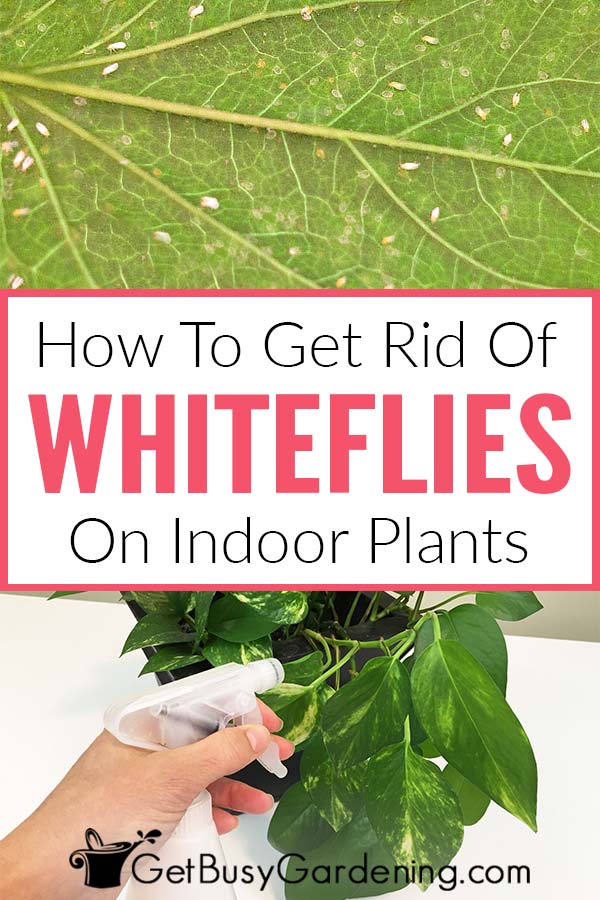
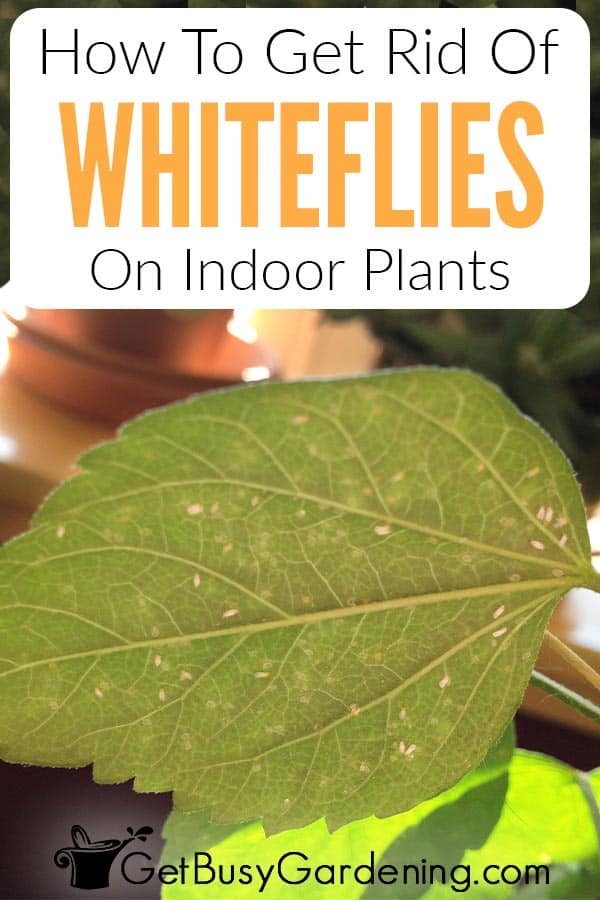
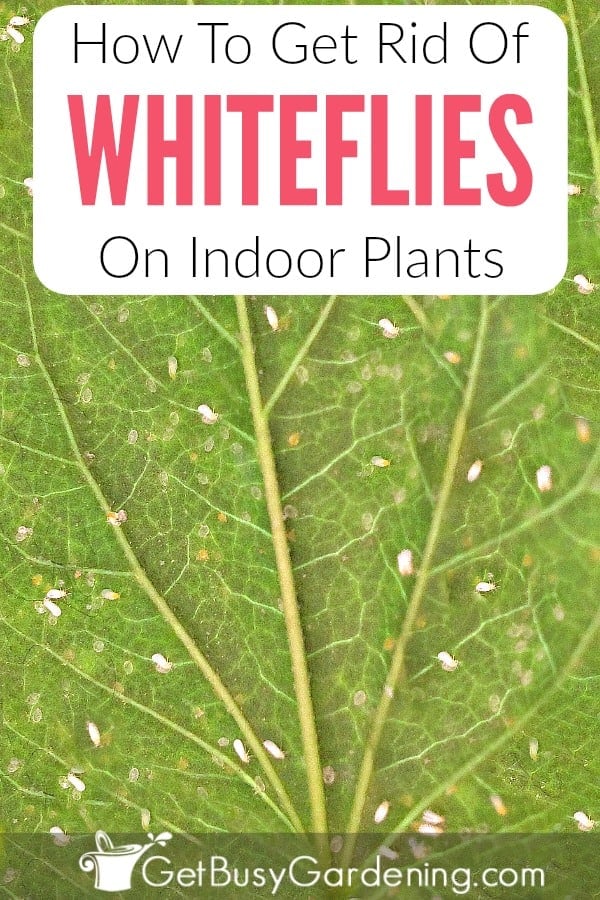
As the name would suggest, they look like tiny white flies or moths. It’s easy to identify them because the adults will fly around frantically when you disturb the infested leaves.
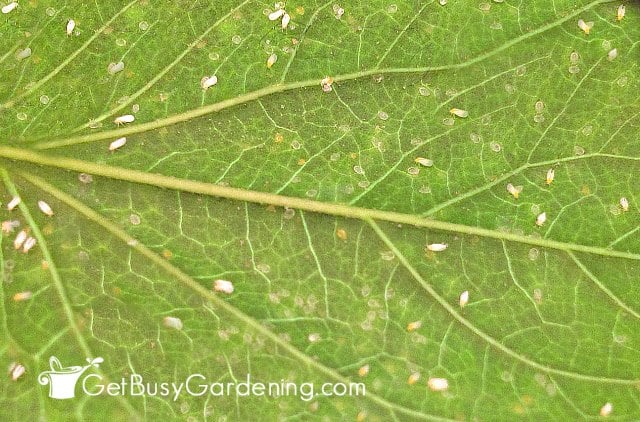
Flip a leaf over and you’ll probably see tons of little white specks or dots (eggs and nymphs), and even more flies under there. Yuck!
But these aren’t the only pests that can infest your indoor plants. If you see white bugs, but they don’t fly around, then you probably have mealybugs, and here’s how to get rid of those.
Otherwise, if the bugs flying around your houseplants are black, then those are fungus gnats, and here’s how to eliminate them.
Their Life Cycle
The full whitefly life cycle takes about 3-6 weeks. There are several stages to it, but the 3 main ones are the eggs, nymphs, and adults.
In the right environment, they can reproduce fairly quickly. It takes about a week for the eggs to hatch, then another couple of weeks for the nymphs to mature into adults.
The adults only live for about a month, but the females can lay as many as 100 eggs during their short life span. Eek!
Whitefly Damage To Plants
Whiteflies harm a houseplant by sucking the juices out of the leaves, causing them to turn yellow and eventually drop off.
Both the adults and the nymphs feed on leaves, but the nymphs wreak the most havoc. So by the time you notice the adults flying around, they’ve probably already done some major damage.
A large population will cause severe damage to the leaves, and can eventually kill the plant. Although mature, healthy plants can sustain a heavy infestation longer than small or weak ones.
Where Do Whiteflies Come From?
It seems like these pests come out of nowhere. One day your houseplant is fine, and the next there are tons of bugs flying around, leaving many people wondering, what causes whiteflies in the first place?
Though they can come from almost anywhere, here are a few of the most common sources:
- Unknowingly bringing home a new plant that’s already infested.
- Using contaminated potting soil.
- Putting your houseplants outside during the summer.
- Bringing in fresh flowers, herbs, fruits, or vegetables from the garden.
- Through window screens (since they’re so small, they can easily crawl in).
Related Post: Where Do Houseplant Pests Come From?
How To Get Rid Of Whiteflies On Indoor Plants
Once you discover whiteflies on an indoor plant, you should take action to control the outbreak right away. Here are the first steps to follow:
- Isolate the affected plant immediately by moving it to another room.
- Wash your hands before handling any of your other houseplants.
- Check all of the surrounding plants, making sure to look under every leaf.
- Begin treating the infestation right away to get rid of it as quickly as possible.
5 Organic Whitefly Treatment Methods
There are several organic whitefly control options, so there’s no need to use toxic synthetic pesticides. Plus they aren’t as effective because bugs can build up a tolerance to these chemicals, making your problem even worse.
Always test any sprays on a few leaves before treating the whole plant, and be persistent in your fight. You can’t treat them once and expect the infestation to go away forever.
Related Post: Natural Pest Control Methods For Houseplants

1. Insecticidal Soap
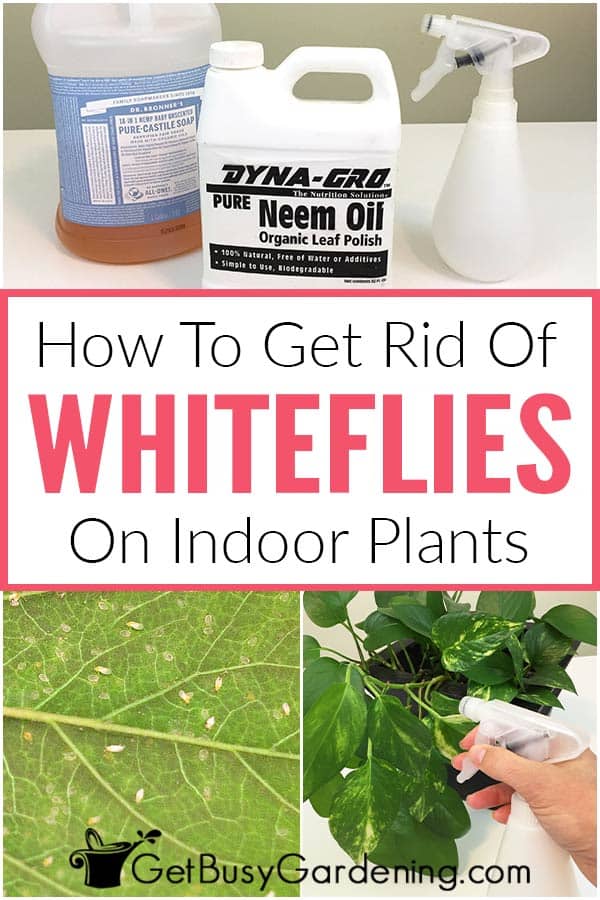
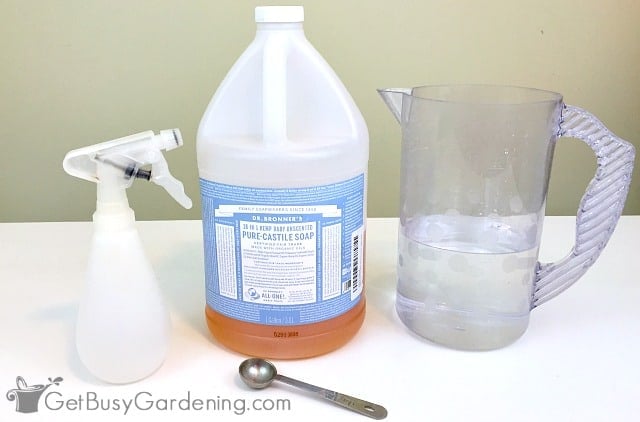
Use an organic insecticidal soap, or make your own by mixing my homemade whitefly spray recipe in a clean bottle:
- 1 teaspoon of mild liquid soap
- 1 liter of tepid water
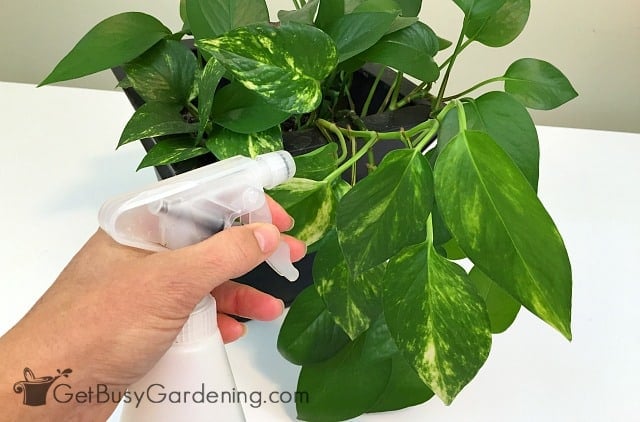
You can spray it on the leaves or use it to wash them. Be sure to focus on the undersides of the leaves, which is where whiteflies like to congregate.
If the plant is small enough, I will bring it to the sink or shower to wash it, then thoroughly rinse the leaves afterward to remove all of the suds. This will knock down the population very quickly.
2. Neem Oil
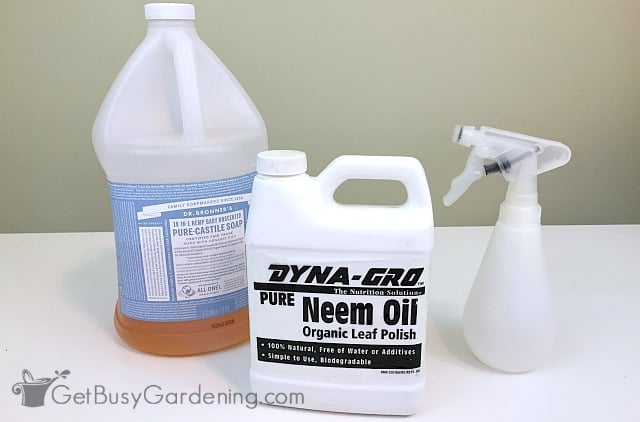
Neem oil is a natural insecticide that works great to eliminate whiteflies, and it also has a residual effect to prevent them from coming back. I buy it as a concentrate and mix up my own spray, here’s my recipe:
- 1 ½ teaspoons of organic neem oil concentrate
- 1 teaspoon of mild liquid soap
- 1 liter of tepid water
This mixture will kill the bugs, eggs, and nymphs on contact, and will also work to eliminate the population long-term. Treat your plant every few weeks until all signs of them are gone, and don’t forget to spray underneath all of the leaves too.
Related Post: How To Use Neem Oil Insecticide On Plants
3. Pruning
In addition to cleaning and spraying the leaves, you can trim off the most heavily infested ones and throw them into the garbage (outside the house).
This can help you get the infestation under control faster by eliminating many of the nymphs and eggs. Just make sure you don’t cut all of the leaves off your plant.
4. Yellow Sticky Traps
Whitefly adults will scatter and lay their eggs on other nearby houseplants, especially when you start treating the infested one.
So if you don’t control the adults, they will just keep moving around, and your problem will never go away.
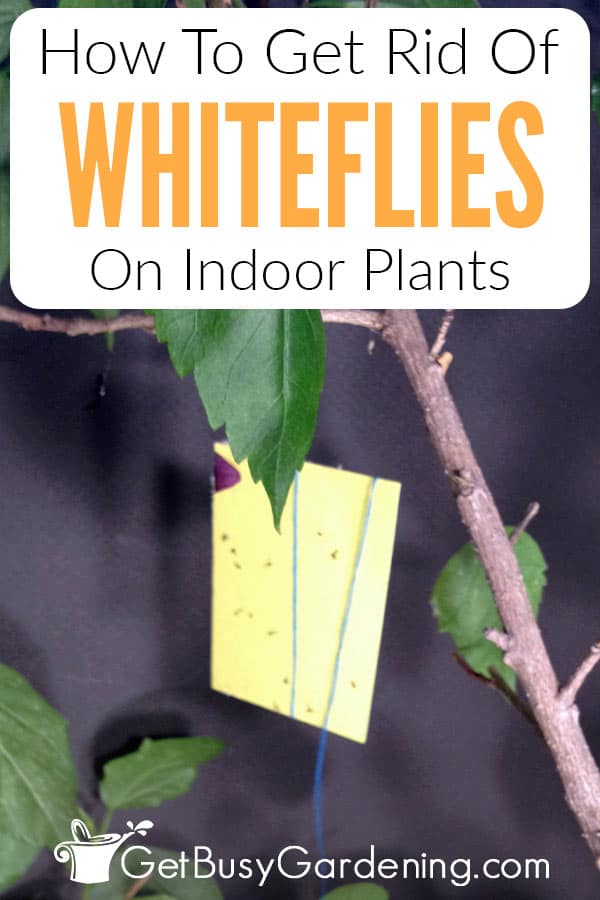
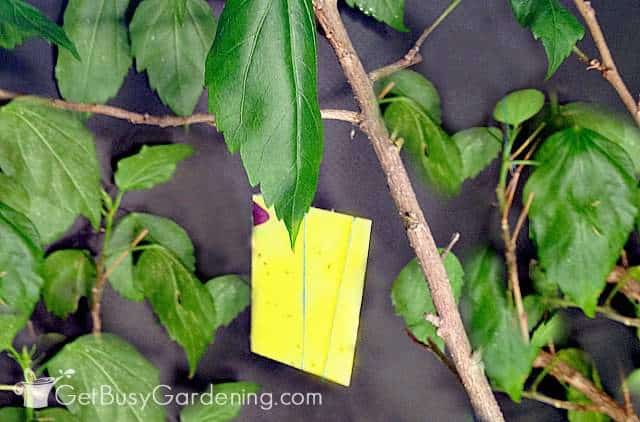
One great method to try is hanging a yellow sticky trap from the top branches, or put a few in and around larger plants. You can also use them to monitor and prevent any future infestations.
5. Vacuum Cleaner
You could also use a handheld vacuum cleaner to capture the adults as they fly from the houseplant. Just be careful not to suck up the leaves in the process.
Gently shake the stem or branches to stir up the whiteflies, then suck them up as they flee. They move fast, so use a small handheld vacuum to make it easier to maneuver.
How To Prevent Whiteflies From EVER Coming Back
Once you’re successful with getting rid of whiteflies on your indoor plants, you’ll want to do everything you can to keep them from coming back. Here are a few long-term prevention tips:
- Check the leaves regularly for signs of bugs, I do this every time I water.
- Quarantine all new ones for a few weeks to ensure they don’t have bugs on them.
- If you put any or your houseplants outside, be sure to clean and debug them before bringing them back indoors.
- Use neem oil as preventive spray on any of your plants that have recurring problems.
Dealing with whiteflies on indoor plants can be difficult, but you can eliminate them. Whatever method you decide to use, you have to be diligent. They can be tough to get rid of, especially if you have several houseplants, but your persistence will pay off in the long run.
If you’re tired of battling indoor plant bugs, then my houseplant pest control eBook is for you. In it you will learn how to identify and kill all of the most common pests, and get my secrets to keep them away, FOR GOOD! Download your copy today!
Share your tips for getting rid of whiteflies on indoor plants in the comments below.

Sean says
FYI neem oil does absolutely nothing to white flies and soap does only marginally more than nothing. I’ve been fighting infestations of these for years and so far nothing kills them that can be considered organic.
Amy Andrychowicz says
In order for neem oil to work, you must be very persistent, and continue to treat the plant every few weeks until all signs of the whiteflies are gone. Since it kills them slowly, and only works when they eat it, you won’t see instant results. It can take several months to completely get rid of them, maybe more if you have multiple plants that are infested. As for insecticidal soap, that only works to kill the eggs and nymphs, because the adults will fly away when you spray the plant. It can definitely help to slow them down, but I agree, it won’t get rid of large infestations if that’s all you use. That’s why I always recommending consistent treatments with neem oil for whiteflies. It’s the only thing that has worked for me to completely get rid of them. Here’s more information about how it works and how to use it effectively… How To Use Neem Oil On Houseplants.
Karen Luongo says
Interested in how to use moth balls for plant protection. I have white flies on my cactus and mealy bugs on my xmas cactus.
Amy Andrychowicz says
I can’t speak to that because I have never used moth balls for houseplant bugs. I prefer to use organic methods, especially indoors. For both whiteflies and mealybugs, I find that regular neem oil treatments works the best. I also hang yellow sticky traps in the plant to capture the whitefly adults, and get rid of them faster.